
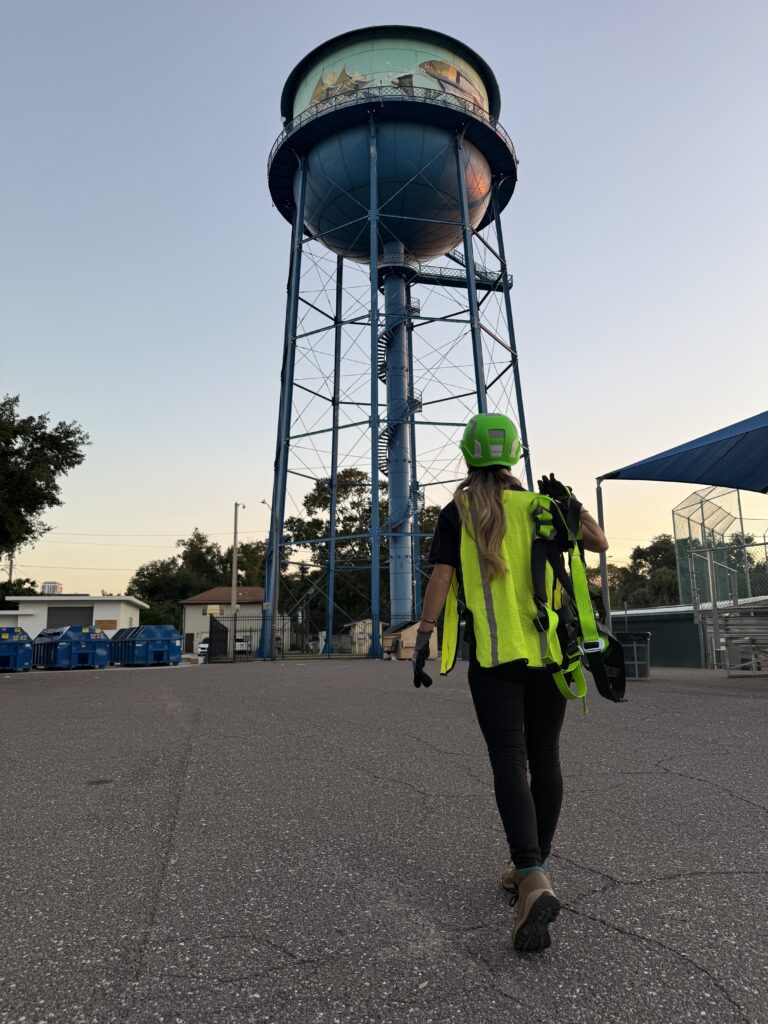
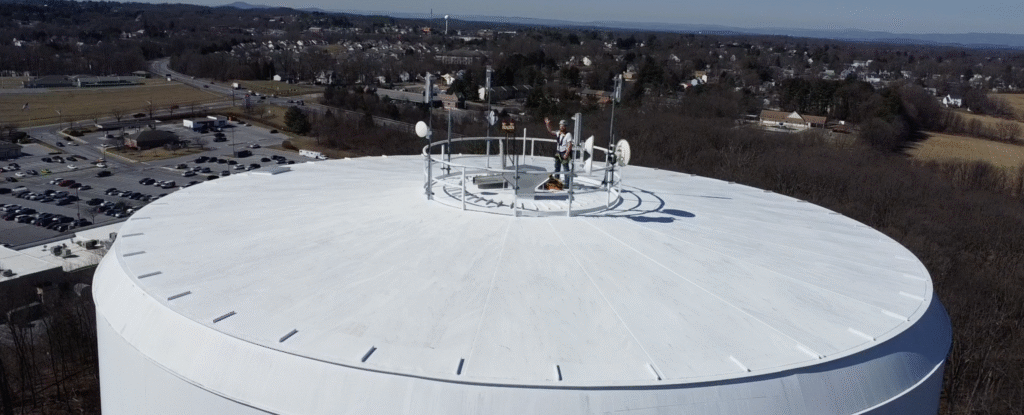
Water Storage Tank Inspections
Assure Fire Solutions provides independent inspections and condition assessments for fire protection and potable water storage tanks. We perform in-service underwater ROV inspections and drained internal inspections, with field measurements available when the scope calls for them.
NFPA 25 Fire Protection Water Tank Inspections
We perform internal inspections of water storage tanks that supply fire sprinkler and other water-based fire protection systems. Our inspections support applicable NFPA 25 Chapter 9 requirements and can be coordinated with your fire protection contractor as part of your inspection, testing, and maintenance program.
Depending on the tank, access, and inspection scope, we document:
- Interior coating or liner condition, including visible corrosion, blistering, and coating breakdown
- Sediment accumulation and its effect on floor visibility
- Accessible ladders, supports, piping, and penetrations
- Exterior components such as hatches, vents, overflow piping, and supports when included in the scope
- Conditions that warrant cleaning, repair, or further evaluation
Planning for a five-year internal tank inspection? Send us your last inspection report and any requirements from your fire protection contractor or authority having jurisdiction.
We assess potable water storage tanks and towers for utilities, facilities, and private water systems. Our findings help owners and operators plan cleaning, coating maintenance, repairs, and future rehabilitation. We coordinate access and equipment sanitation with the water system operator before the inspection.
Potable Water Storage Tank Inspections
Depending on the scope and access, we evaluate:
- Interior coatings and liners for visible corrosion, blistering, staining, and deterioration
- Sediment, debris, and visible deposits
- Accessible hatches, vents, overflow openings, screens, and seals
- Accessible ladders, piping, penetrations, and structural components
- Areas that warrant testing, maintenance, or further evaluation
Inspection methods
The right inspection method depends on your tank’s access, operating needs, and what you need to find out. We review those details before recommending a scope.
In-Service ROV Tank Inspections
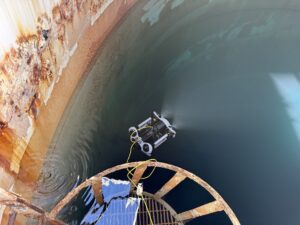
A tethered underwater remotely operated vehicle (ROV) captures video and images of submerged surfaces while the tank remains filled. When access, water clarity, and site requirements allow, this approach can document visible coating or liner deterioration, corrosion, sediment, and accessible submerged components without draining the tank for the inspection.
Water clarity, tank geometry, and sediment can limit coverage. We document those limitations and identify areas that warrant a closer look.
Drained Confined Space Entry
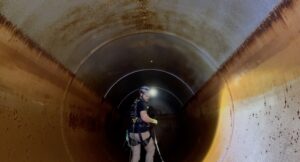
A drained inspection provides direct access to interior surfaces and components. This method is appropriate when the scope calls for close examination, hands-on measurements, or evaluation of areas obscured by water or sediment.
Depending on the project, a drained inspection can include:
- Close visual examination of coatings, welds, seams, and penetrations
- Ultrasonic steel thickness measurements at selected locations
- Pit-depth measurements in areas of localized corrosion
- Coating dry film thickness measurements where applicable
Before the inspection, we coordinate the outage, tank isolation, access, and applicable confined space entry requirements with the site team.
Why Internal Tank Inspections Matter
Coating breakdown, corrosion, liner damage, and sediment can develop below the waterline, where they’re difficult to see during an exterior inspection. An internal inspection documents where these conditions are occurring and provides a baseline for comparison over time.
These findings help you decide what to monitor, when to clean the tank, and which areas need testing or repair.
Interior Roof Corrosion
Coating Breakdown Along a Weld Seam
Coating Blistering
Inspection Reports and Deliverables
Each inspection includes a written report that documents the tank’s condition and helps you plan maintenance, repairs, or further evaluation. Depending on the inspection scope, deliverables include:
- PDF inspection report with findings, inspection coverage, and prioritized recommendations
- Captioned photo log identifying tank components and observed conditions
- Video link or QR code when inspection footage is captured
- Field measurement results when testing is included in the scope
Want to see how we document our findings? Tell us a little about your tank or project. We’ll call to discuss your inspection needs before sharing a relevant redacted sample.
Water Storage Tank Inspection FAQs
Can you inspect a water tank without draining it?
Yes, when the tank has suitable access and underwater visibility. An in-service ROV can document submerged surfaces and components while the tank remains filled.
How often do fire protection water tanks need an internal inspection?
NFPA 25 Chapter 9 includes three- and five-year internal inspection intervals. The interval depends on the tank and its corrosion protection under the applicable edition. Your last inspection report and the requirements adopted for your site can help determine when the next inspection is due.
Can an ROV inspect the tank floor if there’s sediment?
An ROV can document visible sediment and exposed areas of the floor. If sediment obscures the surface you need assessed, cleaning or a drained inspection may be needed.
Can you inspect hydropneumatic tanks?
Yes. We scope hydropneumatic tank inspections based on the vessel, access, and inspection objectives. A drained inspection can include visual examination and selected steel thickness or pit-depth measurements.
What information do you need to quote an inspection?
Send the site location, tank use, approximate capacity, and access photos. Include the most recent inspection report if available, along with any deadline, planned outage, or testing requirements.