
Drained Internal Tank Inspections (Confined Space Entry)
Internal tank inspections performed with full access when draining is required.
Internal tank inspections are performed when water storage tanks are taken out of service, allowing safe entry and full access to interior surfaces and components. This method provides a detailed evaluation of coatings, structural elements, and internal conditions that cannot be fully assessed through in-service inspection methods.
When Drained Internal Inspections Are Required
Drained internal inspections are typically performed when conditions require direct access to interior surfaces or when in-service inspection methods are limited.
This may include situations involving:
- Limited visibility due to water clarity
- Significant sediment accumulation
- Suspected coating failure or corrosion
- Structural concerns or known deficiencies
- Access limitations, including tanks where entry points are located below the waterline
- Compliance-driven internal inspection requirements
What We Evaluate During a Drained Inspection
We evaluate interior tank conditions through direct access, including:
- Close visual inspection of coating systems and exposed steel surfaces
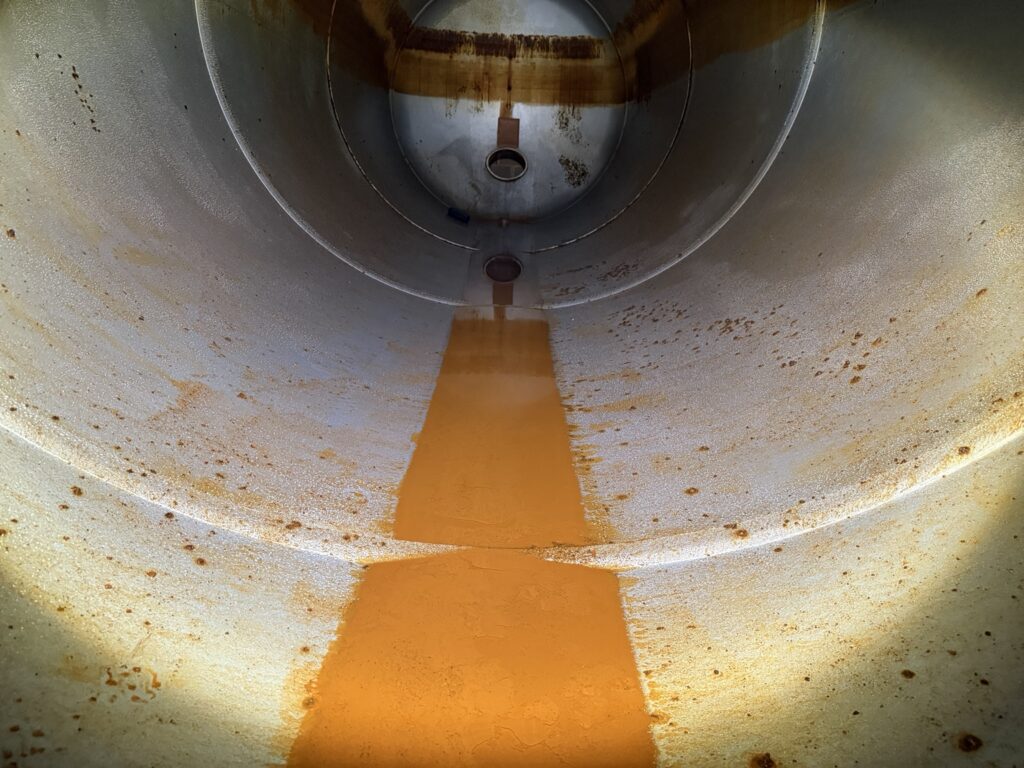
- Identification of corrosion, pitting, and localized deterioration
- Observation of weld seams, roof-to-shell connections, and structural elements
- Inspection of internal piping, appurtenances, and penetrations
- Targeted thickness testing (UT) where condition warrants further evaluation
- Optional field verification methods depending on access and scope
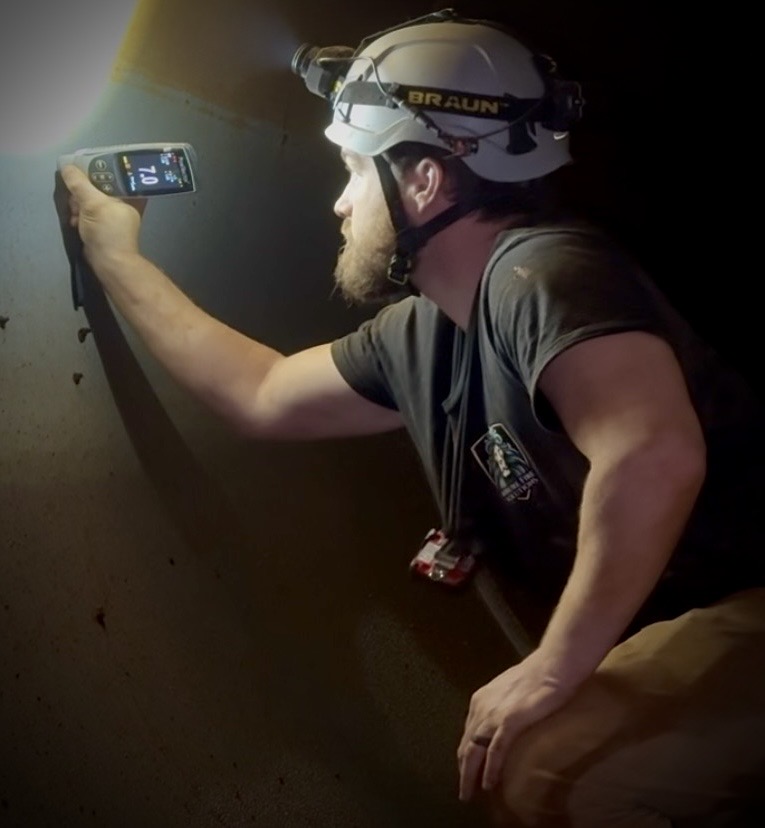
Confined Space Entry & Safety Approach
Drained internal inspections require confined space entry procedures to ensure safe access to the tank interior.
Entry is performed using established safety practices, including:
- Air quality monitoring
- Ventilation where required
- Controlled entry and exit procedures
- Trained personnel and appropriate equipment
All inspections are conducted with safety as a primary consideration, consistent with applicable confined space entry practices.
What This Method Allows
Drained internal inspection provides a level of access and verification not achievable through in-service methods, including:
- Direct surface evaluation without water obstruction
- Confirmation of coating condition at critical interfaces
- Access to floor areas and submerged components
- Ability to perform localized testing and verification
- Full visibility for documentation, planning, and engineering review
Reporting & Defensible Documentation
Our inspections are supported by clear, structured documentation intended for compliance records, maintenance planning, and internal review.
Each report includes:
- Photo-documented interior conditions
- Observations of coating condition, corrosion, and structural elements
- Identification of impairments or areas requiring attention
- Notes on sediment, obstructions, or limited visibility areas
- Documentation aligned with applicable standards or project requirements
Reporting can be structured to support NFPA 25 inspection documentation, AWWA-based evaluations, or project-specific inspection scopes depending on the application.
Reports are delivered in a format that can be retained for facility records and referenced for future inspections, maintenance planning, or engineering evaluation.
When This Method Is the Right Choice
Drained internal inspections are typically selected when full interior access is required or when in-service inspection methods are not feasible.
This approach is appropriate in situations such as:
- Tanks scheduled for drain-down as part of maintenance or repair
- Pressure tanks where interior access is located below the waterline
- Systems with limited visibility due to water clarity or internal conditions
- Situations requiring direct testing, such as ultrasonic thickness measurements
- Tanks with known or suspected deficiencies requiring close evaluation
- Projects involving rehabilitation, coating work, or engineering review
This method allows for direct observation and evaluation of interior conditions that cannot be fully assessed through in-service inspection alone.
Related Services
Fire Protection Tank Inspection Services
Independent fire protection tank inspection services documenting internal tank conditions to support compliance, planning, and system reliability.
ROV In-Service Internal Inspections
Remotely operated vehicle (ROV) inspections providing interior visibility while tanks remain in service when conditions allow, documenting internal conditions without a planned drain-down.
Internal Tank Inspections (Drained / Confined Space Entry)
Internal inspections performed after tanks are taken out of service, allowing full access for detailed evaluation of coatings, structure, and internal components.
AWWA Water Storage Tank Evaluations
Condition evaluations for water towers and potable water storage tanks aligned with AWWA guidance.
Coating QA – Owner’s Representative
Independent oversight and documentation during coating, repair, and rehabilitation projects to verify work aligns with project requirements and applicable standards.
Asset Condition Assessment & Planning
Objective assessment supporting maintenance planning, prioritization, and long-term asset management decisions for water storage systems and related infrastructure.