
Water Storage Tank Inspections

Assure Fire Solutions provides independent inspections and condition assessments for fire protection and potable water storage tanks. We perform in-service underwater ROV inspections and drained internal inspections, with field measurements available when the scope calls for them.

NFPA 25 Fire Protection Water Tank Inspections

We perform internal inspections of water storage tanks that supply fire sprinkler and other water-based fire protection systems. Our inspections support applicable NFPA 25 Chapter 9 requirements and can be coordinated with your fire protection contractor as part of your inspection, testing, and maintenance program.

Depending on the tank, access, and inspection scope, we document:

  • Interior coating or liner condition, including visible corrosion, blistering, and coating breakdown
  • Sediment accumulation and its effect on floor visibility
  • Accessible ladders, supports, piping, and penetrations
  • Exterior components such as hatches, vents, overflow piping, and supports when included in the scope
  • Conditions that warrant cleaning, repair, or further evaluation

Planning for a five-year internal tank inspection? Send us your last inspection report and any requirements from your fire protection contractor or authority having jurisdiction.

We assess potable water storage tanks and towers for utilities, facilities, and private water systems. Our findings help owners and operators plan cleaning, coating maintenance, repairs, and future rehabilitation. We coordinate access and equipment sanitation with the water system operator before the inspection.

Potable Water Storage Tank Inspections

Depending on the scope and access, we evaluate:

  • Interior coatings and liners for visible corrosion, blistering, staining, and deterioration
  • Sediment, debris, and visible deposits
  • Accessible hatches, vents, overflow openings, screens, and seals
  • Accessible ladders, piping, penetrations, and structural components
  • Areas that warrant testing, maintenance, or further evaluation

on top a assure fire solutions tank inspections

Inspection methods

The right inspection method depends on your tank’s access, operating needs, and what you need to find out. We review those details before recommending a scope.

A tethered underwater remotely operated vehicle (ROV) captures video and images of submerged surfaces while the tank remains filled. When access, water clarity, and site requirements allow, this approach can document visible coating or liner deterioration, corrosion, sediment, and accessible submerged components without draining the tank for the inspection.

Water clarity, tank geometry, and sediment can limit coverage. We document those limitations and identify areas that warrant a closer look.
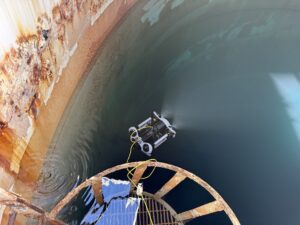
ROV deployed inside of a fire water storage tank.

A drained inspection provides direct access to interior surfaces and components. This method is appropriate when the scope calls for close examination, hands-on measurements, or evaluation of areas obscured by water or sediment.

Depending on the project, a drained inspection can include:

  • Close visual examination of coatings, welds, seams, and penetrations
  • Ultrasonic steel thickness measurements at selected locations
  • Pit-depth measurements in areas of localized corrosion
  • Coating dry film thickness measurements where applicable

Before the inspection, we coordinate the outage, tank isolation, access, and applicable confined space entry requirements with the site team.
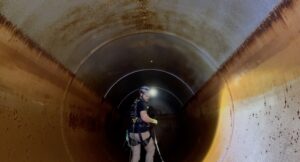
Interior of a drained fire protection water storage tank during inspection

Why Internal Tank Inspections Matter

Coating breakdown, corrosion, liner damage, and sediment can develop below the waterline, where they’re difficult to see during an exterior inspection. An internal inspection documents where these conditions are occurring and provides a baseline for comparison over time.

These findings help you decide what to monitor, when to clean the tank, and which areas need testing or repair.

Interior Roof Corrosion

An internal inspection allows us to examine the underside of the roof and document where corrosion or coating breakdown is visible.

Coating Breakdown Along a Weld Seam

This photo shows where the coating has deteriorated along an interior weld seam. Documenting the location gives the owner a reference for follow-up inspections and maintenance.

Coating Blistering

Blisters appear as raised areas in the coating. We document their size, location, and distribution to help the owner track changes over time.

Inspection Reports and Deliverables

Each inspection includes a written report that documents the tank’s condition and helps you plan maintenance, repairs, or further evaluation. Depending on the inspection scope, deliverables include:

  • PDF inspection report with findings, inspection coverage, and prioritized recommendations
  • Captioned photo log identifying tank components and observed conditions
  • Video link or QR code when inspection footage is captured
  • Field measurement results when testing is included in the scope


Want to see how we document our findings? Tell us a little about your tank or project. We’ll call to discuss your inspection needs before sharing a relevant redacted sample.

Water Storage Tank Inspection FAQs

Yes, when the tank has suitable access and underwater visibility. An in-service ROV can document submerged surfaces and components while the tank remains filled.

NFPA 25 Chapter 9 includes three- and five-year internal inspection intervals. The interval depends on the tank and its corrosion protection under the applicable edition. Your last inspection report and the requirements adopted for your site can help determine when the next inspection is due.

An ROV can document visible sediment and exposed areas of the floor. If sediment obscures the surface you need assessed, cleaning or a drained inspection may be needed.


Yes. We scope hydropneumatic tank inspections based on the vessel, access, and inspection objectives. A drained inspection can include visual examination and selected steel thickness or pit-depth measurements.

Send the site location, tank use, approximate capacity, and access photos. Include the most recent inspection report if available, along with any deadline, planned outage, or testing requirements.